
Mora
Iconic products across borders
When you visit Mora, there’s always something extraordinary to take home. The region is known for three iconic products—faucets, knives, and wooden Dala horses—that have defined Mora’s identity for generations. These products have transformed Mora into a distinguished engineering hub, celebrated throughout Sweden and across borders.
Rich industrial heritage and innovation
Mora’s engineering tradition began with clockmaking. The industry truly flourished in the late 19th century, powered by advancements in brassworking, which led to the production of world-class faucets. Knife production soon followed, and together these crafts laid out the groundwork for Mora’s reputation for quality and innovation. Entrepreneurship and mechanical skills have distinguished Mora and helped create an extensive industry. Today, around 2000 companies operate in Mora in different fields and with diversified portfolios. FM Mattsson Mora Group AB, Aktiebolaget Wibe, Jale AB, Vi Omsorg i Sverige AB, Morakniv AB, Bilkompaniet Dalarna AB, Mattsson Metal AB and Nya Siljans Chark AB are some of the biggest employers in Mora.
Industrial craftsmanship with global reach
Mora’s industrial heritage is exemplified by two globally recognized brands: FM Mattsson and Morakniv. Emerging from the region’s strong traditions in clockmaking, brassworking, and knife production during the late 19th century, both companies grew from small-scale craftsmanship into international industrial leaders. Today, FM Mattsson is one of Northern Europe’s largest and most modern faucet manufacturers, while Morakniv is known worldwide for its high-quality knives—together reflecting Mora’s enduring strengths in engineering, design, and innovation.
Connectivity, healthcare and regional access
Mora Airport plays an important role in the region’s connectivity and societal resilience. The airport is used for commercial flights, supports the healthcare system through medical and emergency transport, and serves other essential regional functions. It strengthens accessibility to Mora and northern Dalarna, both for residents and for businesses operating across Sweden and beyond.
The Dalecarlian horse crafted in Mora since the 18th century
The Dalecarlian horse, the stong symbol of Sweden is lovingly crafted in the Mora region since the 18th century. In 1939, the Dalecarlian horse represented Sweden at the New York World’s Fair, cementing its status as a national symbol. A three-meter-tall horse was displayed at the Fair.
Worldclass art and the world’s largest cross-country ski event
The Zorn Museum houses the world’s largest collection of works by Anders Zorn (1860-1920), Sweden’s revered impressionist artist. Every year, thousands of visitors from Sweden and beyond come to experience Zorn’s art. The Zorn Museum was opened in 1939, and today, it produces not only classic but also temporary exhibitions several times each year.
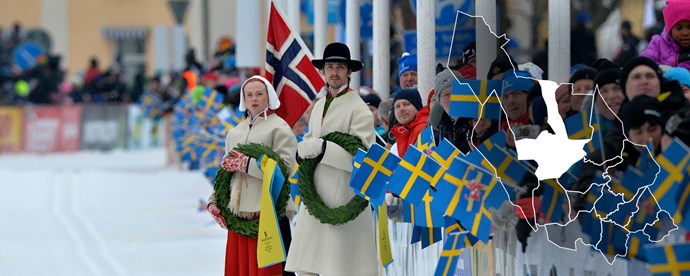
I Mora i also the world’s largest cross-country ski race, held annually since 1922. The classic 90 km route from Berga village in Sälen to Mora is now joined by Vasaloppet’s ‘winter week’ of cross- country skiing and its ‘summer week’ of mountain biking and running, together attracting nearly 100,000 participants every year
The shopping hub of northern Dalarna
Mora is also a key retail destination in northern Dalarna. The local retail sector is centered around two main shopping areas—Noret and the city center—supplemented by several additional retail zones. Together, they offer a broad mix of commerce and services that attract visitors from across the region.